Beginner · 5 min read
The 5 patterns every beginner should know first.
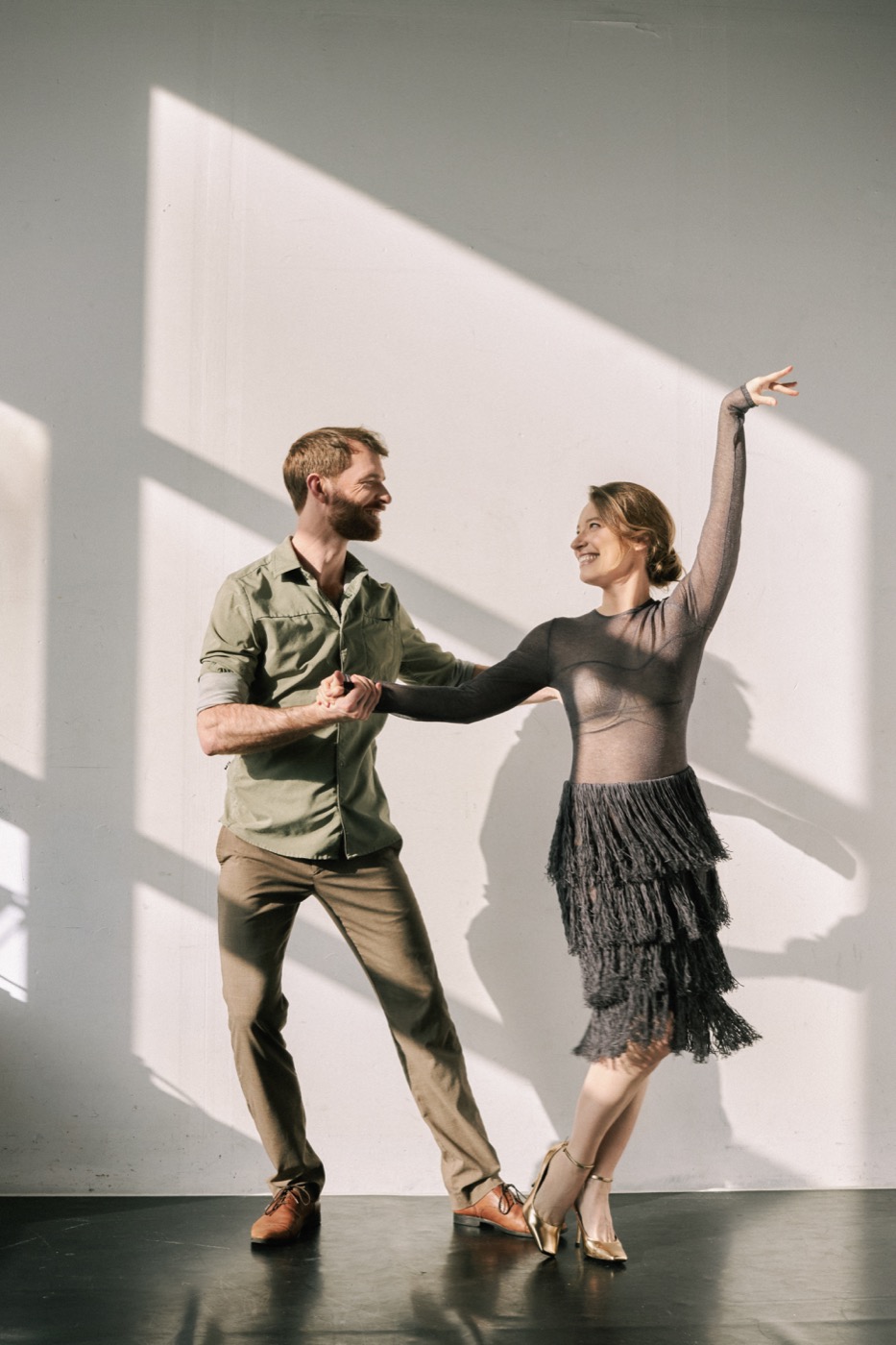
West Coast Swing has hundreds of patterns. You only need five to survive (and thrive) at your first social.
When people ask us where to start, they usually expect a long list. The truth: most of what you'll dance in your first six months is a remix of five foundational patterns. Learn these clean and you can dance to almost any song, with almost any partner, right now.
1. The sugar push
Six counts. You walk toward your partner, they walk toward you, you meet in the middle and you send them back. That's it. The sugar push is the “hello” of West Coast Swing. You'll use it dozens of times a night, especially at the top of a song when you're still finding the groove.
Focus on: waiting for the pull. Beginners rush into the push. The magic is in the pause.
2. The left side pass
Follower travels past the leader's left side. It's how you keep the slot alive: the invisible line WCS is danced along. Left side pass gets you comfortable moving through the leader instead of just around them.
3. The right side pass
The mirror of #2. Different hand connection, different feel. Once you have both, you can trade sides all night without repeating yourself.
4. The tuck turn
A right side pass with a turn built in. This is your first taste of styling: the moment you realize WCS is a conversation, not a script.
5. The whip
Eight counts of pure fun. Follower goes past the leader, gets a small anchor and comes back through. Once the whip clicks, everything else in WCS unlocks. It's the pattern that teaches you what “stretch” and “compression” actually feel like.
Learn one pattern per week for five weeks. By week six, you'll have more vocabulary than most people who've been dancing for a year.
Want us to walk you through them?
Book a first private lesson. We'll do all five in an hour, in whatever order feels right for you.
Book a lesson →
Beginner · 6 min read
Find your beat. Three drills you can do alone.
Timing isn't a talent. It's a habit. Fifteen minutes a day for two weeks and it's yours.
Half of what makes a dancer look good is being on the beat. Not fancy footwork, not styling, not tricks. Just landing on the pulse the music is asking for. The good news: you can build this without a partner, without a studio, without even any dance training.
Drill 1 · Walk to any song for 3 minutes
Put on any song with a clear beat (start with 90 to 110 bpm, think Adele, John Mayer, most soul). Walk around your room. Every step must land on a beat. That's the whole drill. Do this daily for a week.
Common mistake: you walk fast at first and drift off the beat. Slow down until you can hit every single downbeat cleanly.
Drill 2 · Count out loud
Same music, but now count "1, 2, 3, 4" out loud while you walk. Feel where the "1" lands. It's usually where the singer starts a line or where the drum hits hardest. If you can hear the “1,” you can dance to anything.
Drill 3 · Add pauses
Walk for 8 beats, then freeze for 2. Walk 8, freeze 2. Your body has to feel the beat continuing even when you're still. That's the exact skill you need for the anchor in every WCS pattern.
WCS isn't 8 beats of movement. It's 6 beats of movement, 2 beats of listening. The listening is where the dance actually lives.
Ready for the next step?
A 45-minute private lesson is enough to lock these drills into your body and add a partner. Book one when you're ready.
Book a lesson →
Wedding · 6 min read
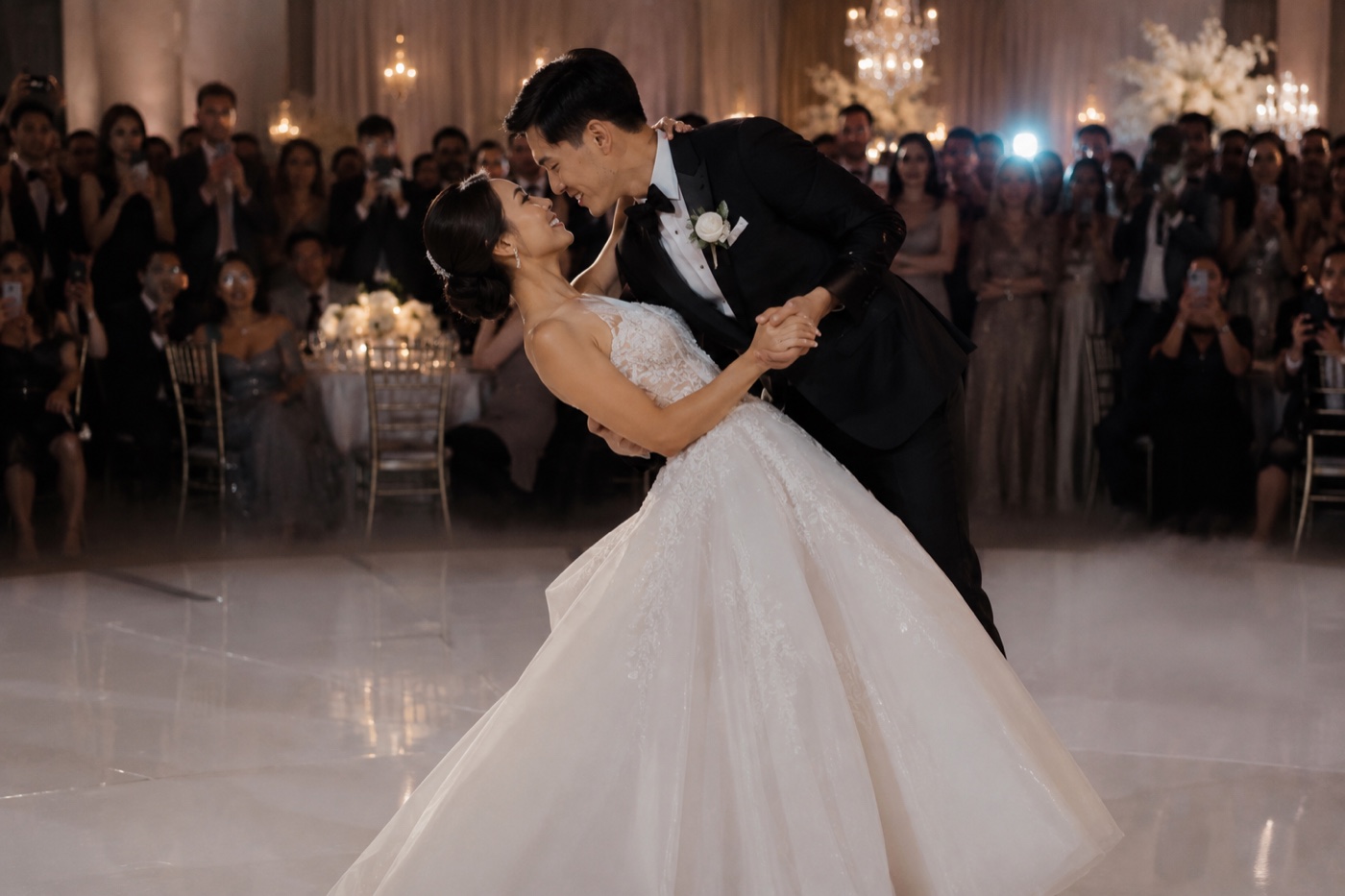
Your wedding first dance. The 4-lesson timeline.
Our full wedding package is 4 private lessons over 6 to 12 weeks. Here's exactly what happens in each one, and what you should be doing between them.
The single most-asked question we get from engaged couples: “When should we start?” Six to twelve weeks out is our sweet spot. Enough runway for the choreography to feel like yours, not too much to lose momentum. The 4 lessons in our package are the anchor. Here's what happens in each.
Lesson 1 · Meet & sketch (~week 10 to 12)
- You dance a little, we watch. We learn your bodies, comfort level, and any injuries or dress constraints.
- We finalize the song together. Lyrics, tempo, and length matter more than genre. Zoom consult before this call happens too.
- We sketch the whole routine on paper. You leave with a rough “this is what it will feel like” and one small drill to practice.
Lesson 2 · Learn Part A (~week 8)
The heaviest teaching lesson. You'll learn the first half of the routine: usually the entrance, the first phrase and a signature moment. Expect to feel like you'll never remember it. You will. We film everything at the end so you can rehearse at home.
Lesson 3 · Learn Part B + connect it (~week 4 to 6)
Second half of the routine + we glue Part A and Part B together. Somewhere in this lesson the routine stops feeling like homework and starts feeling like your song. If you want a lift or dip, this is when we add it.
Lesson 4 · Polish & day-of prep (~week 1 to 2)
- Full run-through in your actual shoes. Bring anything dress-like you have. Fabric changes everything.
- Styling, cleanup, and small fixes. This is when it starts looking like the version guests will see.
- Backup plan: what to do if the DJ mis-cues, if the song starts on a different verse, if a heel breaks. We walk you through all of it.
Between lessons · what to practice
- 10 to 15 min a day of the sections we filmed. Muscle memory, not perfection.
- One full run-through in your kitchen the day before each lesson.
- Watch your video the morning of the wedding. That's the memory your body needs.
The couples who look best on their wedding day aren't the ones who practiced most. They're the ones who trust their bodies to remember. Four lessons plus consistent short practice gets you there.
Ready to plan yours?
Our full Wedding Dance Package is $499. Four lessons, Zoom consult, music edit, rehearsal video and day-of run-through.
See the wedding package →